Rapid-response water augmentation for Hoover Dam & Glen Canyon Dam
Deployable Atmospheric Water Generation (AWG) + solar facilities to produce new water supply and support reservoir stabilization for Lake Mead and Lake Powell.
Request feasibility + budgetary estimate (fast response).
Hoover Dam Dead Pool Crisis — The Rapid-Response Plan
Watch Dominick break down the Hoover Dam dead pool crisis, what it means for hydropower and the Colorado River system, and how solar-powered AWG can produce new water supply at infrastructure scale.
The Colorado River system is under severe stress — hydropower reliability is at risk
- Low reservoir elevations reduce available hydropower head and generation capacity
- Reliability risk escalates when inflows can't keep pace with demand and evaporation
- Fastest solutions are modular, scalable, and measurable
Create new water supply — near the point of need
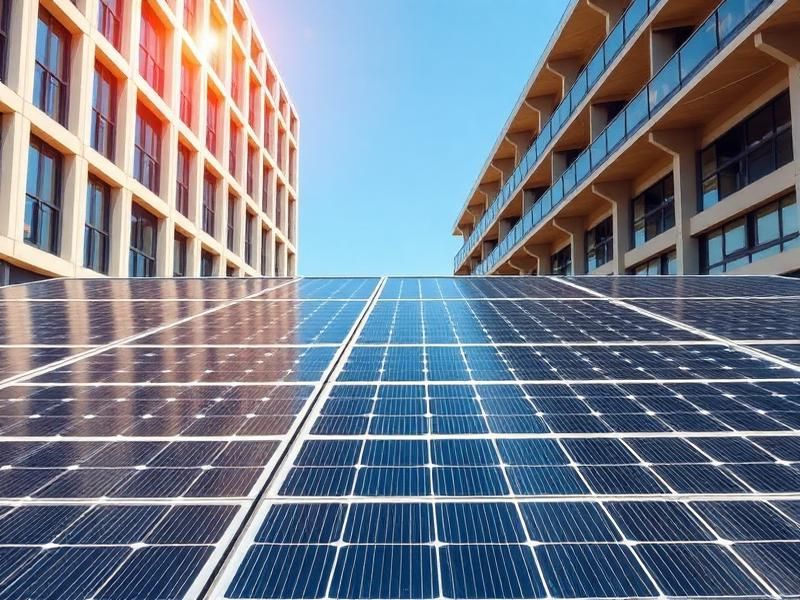
Blue Oceans Solutions deploys AWG facilities that convert humidity into clean usable water, powered primarily by solar (with optional grid/hybrid power strategies). The objective is to produce new daily water volume that can be conveyed to the reservoir system via approved introduction methods.
Outcomes
- New daily water production (not a reallocation)
- Modular deployment: start fast, then scale
- Auditable impact: production + delivery reporting aligned to stakeholder needs
Two deployment scales (pilot & utility-scale)
100,000 gallons/day module
- Output
- 100,000 gallons/day
- Facility footprint (building)
- ~0.75 acres
- Total land requirement (incl. solar)
- ~10 acres
- Budgetary unit price
- ~$60,000,000 per module
1,000,000 gallons/day facility
- Output
- 1,000,000 gallons/day
- Facility footprint (building)
- ~3.4 acres (potentially less)
- Total land requirement (incl. solar)
- ~100 acres (solar is the dominant land driver)
The building is compact — the power strategy drives land use
The AWG facility footprint is relatively small. The majority of land requirement is typically driven by solar generation to power the system. Where grid interconnect, curtailed renewables, or hybrid power options exist, total land requirements can be reduced.
Budgetary pricing now, cost-down as scale increases
This is structured for rapid initial deployment with a clear path to scale. As projects expand (multi-unit campuses, standardized site designs, shared interconnect, shared O&M, volume procurement), unit economics improve and pricing can come down.
Planet over profit — measurable outcomes
- Integrated planning: water + power strategy (not just equipment)
- Field-ready deployment approach with practical integration options
- Measurable reporting: production metrics + impact documentation
- Mission-driven execution with partner support as needed
FAQ
Quick answers to common feasibility questions.
Water quality depends on configuration and site requirements. We can scope purification and compliance alignment as part of feasibility so produced water meets the intended use case.
Deployment timelines depend on site readiness and power plan. Share your location and timeline and we'll outline the fastest path from planning to on-site operation.
Introduction methods are site-specific and must align with stakeholder and regulatory requirements. During feasibility we evaluate practical conveyance and approved introduction pathways.
Primarily solar, with optional grid interconnect or hybrid strategies depending on constraints and goals.
Yes. As projects scale (multi-unit campuses, standardized designs, shared interconnect, shared O&M, volume procurement), unit economics improve and pricing can come down.
Request feasibility (fast response)
Tell us what you're trying to solve (location, timeline, target daily volume). We'll respond with the fastest path to a workable deployment plan.
Note: Phone numbers are collected for follow-up, but some lead notifications may only include name, email, and message details depending on routing.